

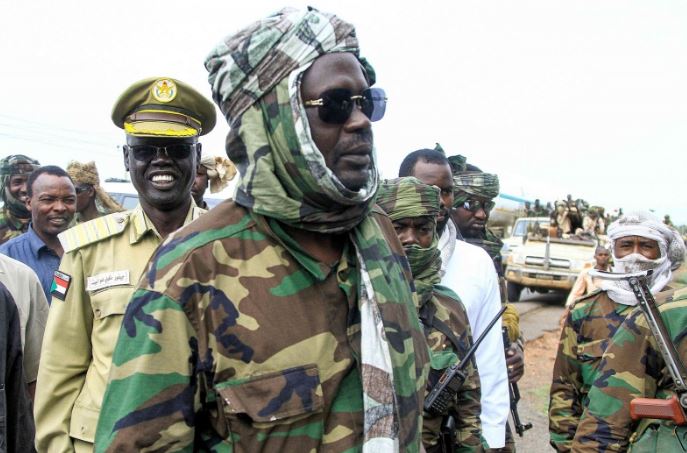
Darfur Governor Minni Arko Minnawi announced that he would not agree to any humanitarian ceasefire in Sudan unless the Rapid Support Forces (RSF) withdraw from cities, residential areas, and hospitals, release abductees, and ensure the safe return of displaced people to their homes.
In a post on the X platform, Minnawi warned that any truce failing to meet these conditions would, in effect, lead to the partition of Sudan. He questioned, “Who would such a ceasefire serve if it does not protect civilians and hold perpetrators accountable?” — underscoring his firm rejection of any deal that does not guarantee civilian safety and rights.
His statement came as the U.S. administration, through Masad Boulos, the senior adviser to the U.S. President for African and Arab affairs, proposed a humanitarian ceasefire to both parties in the conflict.
Meanwhile, Fadel Mubarak, the Executive Office Director of the Humanitarian Aid Commission in Khartoum State, reported that more than 10,000 displaced people had arrived in Khartoum following RSF attacks on areas in North Darfur and North Kordofan States.
Mubarak noted that the Khartoum authorities, in cooperation with the local community, established temporary shelters in four locations and provided food assistance to the displaced. He urged specialized humanitarian organizations to deliver urgent aid — particularly winter supplies, hygiene materials, and medicines — as the cold season begins in Sudan.
Displacement and Abuses
For his part, Sudanese Minister of Human Resources and Social Development, Mutaasim Ahmed Saleh, said that RSF forces continue to commit systematic crimes in the city of El Fasher, the capital of North Darfur State.
During a press conference on the displacement crisis in the region, he stated that 50,000 displaced people from El Fasher had reached the locality of Al-Dabbah in the Northern State, despite RSF attempts to prevent hundreds of thousands of civilians from leaving the city and their brutal treatment of those who tried.
Saleh stressed that what he described as crimes committed by the RSF clearly show that the group has no place in Sudan’s political future.
Separately, Ahmed Babiker Adam, Kordofan States’ representative at the Commission for Voluntary and Humanitarian Work, warned of worsening humanitarian conditions faced by those who fled to Khartoum after the RSF seized their areas in Kordofan.
He told Al Jazeera that hundreds of families arrived in Khartoum with no means to survive, adding that most Kordofan displaced families are currently staying with relatives in the capital and that the available aid is insufficient to meet their basic needs.

