

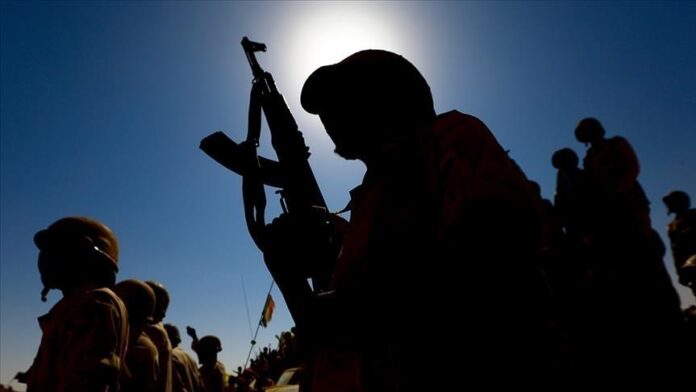
Tensions have escalated in Sudan over the true situation on the ground in the city of Babanusa, West Kordofan State, after the Rapid Support Forces (RSF) released video footage claiming to show their fighters inside the headquarters of the Sudanese Army’s 22nd Infantry Division. The RSF said the footage, shared widely on social media, proved that its forces had taken full control of the city and key military positions.
The Sudanese Armed Forces (SAF), however, swiftly denied these claims, asserting that Babanusa remains firmly under their control. In an official statement, the army said its units had repelled a large-scale RSF assault on Monday, describing the circulated videos as “part of an organized campaign to mislead local, regional, and international audiences.” The army accused the RSF of waging a “media manipulation effort” to create a distorted picture of the battlefield.
Intensifying Battles in West Kordofan
These developments come amid intensified fighting between the army and the RSF across West Kordofan, where Babanusa has become a focal point of repeated clashes and attempts by both sides to secure strategic positions. Local sources report that the RSF has mobilized tens of thousands of fighters equipped with advanced weaponry in a bid to decisively capture the city, consolidate its presence in the region, and strengthen its negotiating position before any potential talks.
Field reports indicate that recent confrontations have been among the fiercest since the conflict began, with both artillery and drone strikes used heavily by the warring factions. Residents have expressed growing concern over worsening humanitarian conditions as the violence shows no sign of abating.
Conflicting Statements and Mutual Accusations
On the political front, the RSF’s newly formed political wing issued a statement accusing the army of committing “a new breach of the humanitarian truce” called for by the Quartet (the United States, Saudi Arabia, Egypt, and the United Arab Emirates). The statement claimed that the army had launched an offensive on RSF positions in Babanusa “in blatant violation of international humanitarian law.”
The RSF added that it “has remained committed to the truce since its announcement,” warning that the latest attack—reportedly the eighth in a row—demonstrated the army’s disregard for legal and humanitarian obligations. “The Sudanese Armed Forces continue to obstruct peace efforts and prevent humanitarian aid from reaching civilians,” the statement read. It went on to assert that RSF units had “repelled the assault completely and carried out a precision counter-operation that resulted in full control over the army’s 22nd Infantry Division headquarters and the city of Babanusa.”
The Sudanese Armed Forces countered with their own statement on Tuesday, December 2, 2025, describing RSF leader Mohamed Hamdan Dagalo’s (known as Hemedti) recently announced three-month unilateral humanitarian truce as “a misleading political maneuver.” The army said: “We affirm that this so-called truce is nothing more than a propaganda tactic aimed at covering up RSF field movements and the ongoing inflow of Emirati support fueling the war and killing Sudanese citizens.”
The statement accused the RSF of continuing daily drone and artillery strikes on Babanusa despite its public commitment to a ceasefire, arguing that this contradiction “exposes the falsity of its claims.”
Broader Context of the Sudanese Crisis
The renewed hostilities in West Kordofan come as regional and international mediators attempt to push for a peaceful settlement to the conflict that has ravaged Sudan for more than a year and a half, leaving thousands dead or injured and displacing millions both internally and across borders.
Last week, Hemedti announced that his forces were willing to observe a three-month humanitarian truce, pledging to halt all hostilities and facilitate humanitarian operations. However, the Sudanese Army dismissed the declaration as a “political and media stunt” designed to win international sympathy and relieve mounting pressure on the RSF.
As fierce clashes continue across Darfur and Kordofan states, prospects for a genuine ceasefire or a lasting peace agreement remain bleak. Deep-seated distrust between the two sides and fears of the conflict expanding into new areas have further undermined hopes for stability in Sudan.

