

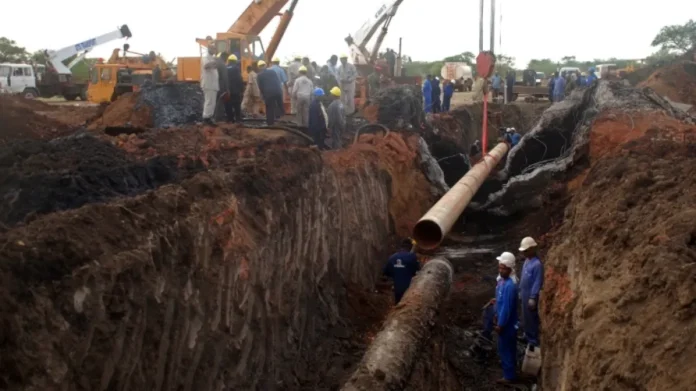
In a significant escalation of Sudan’s conflict, the Rapid Support Forces (RSF) seized control on Monday of the Heglig oil field in West Kordofan State, southern Sudan, one of the country’s most important energy assets and its largest producing field. The takeover marks a major shift in the military balance between the Sudanese army and the RSF, who have been locked in a devastating war since April 2023.
Local and military sources reported that RSF units stormed the strategic field near the border with South Sudan, as well as the nearby headquarters of the army’s 90th Infantry Brigade, triggering heavy clashes and initial reports of casualties amid continued insecurity in the region. An engineer working at Heglig said RSF fighters gained full control of the facilities at dawn, forcing technical teams to shut down the field and a nearby processing plant before staff were evacuated across the border into South Sudan.
In a statement, the RSF said it had taken over the “strategic Heglig area” and described the capture of the oil field as a pivotal step toward “liberating” the rest of the country, given the site’s central role in Sudan’s economy. A Sudanese army source, speaking to international media, said government forces withdrew from Heglig to avoid damage to vital oil infrastructure, while other sources close to the army confirmed that troops and workers had left the field earlier to prevent destruction of facilities.
Strategic Oil Hub Under Threat
Heglig lies in the far south of Kordofan, on the border with South Sudan, and is considered Sudan’s largest oil field and a key hub for pumping crude from South Sudan through a pipeline to Port Sudan on the Red Sea for export. Control of the field therefore represents a powerful blow to Sudan’s energy sector and a direct threat to one of Khartoum’s few remaining hard-currency sources. It also jeopardises the main processing infrastructure for South Sudan’s oil exports, upon which Juba’s government budget heavily depends.
According to sector data, Heglig currently produces around 20,000 barrels of oil per day, down from a peak of about 60,000 barrels in 2012, after years of decline and repeated disruptions from conflict. Before the RSF advance, the field operated at a minimal level, with roughly 75 wells still managed under difficult security conditions. The loss of Heglig follows the RSF’s earlier seizure of the Balila oil field in West Kordofan roughly six months into the conflict, which had already sharply reduced Sudan’s daily crude output.
Workers and engineers describe the area as effectively besieged in recent weeks after the RSF took control of Babnousa, a key nearby town, leaving the army with few options other than withdrawal to avoid large-scale destruction of oil infrastructure. Heglig also lies about 45 kilometres west of Abyei, a disputed border area between Sudan and South Sudan that contains significant untapped petroleum reserves that remain idle due to long-running political and security tensions.
Expanding Frontlines in Kordofan and Darfur
Analysts say the RSF’s move in Kordofan aims to penetrate the army’s last defensive lines in central Sudan and pave the way for attempts to retake the capital, Khartoum, along with other major cities. The capture of Heglig comes after the RSF consolidated its control over the entire Darfur region in late October, leaving the army holding only parts of northern North Darfur and most of the remaining 13 states, including the capital region.
The three Kordofan states have witnessed intense fighting for weeks, with frontlines shifting across rural areas and around key towns. The Sudanese army has announced advances in parts of southern Sudan, claiming to have recaptured RSF positions in the Kordofan region and to have repelled drone attacks launched by the RSF on the city of Damazin, the capital of Blue Nile State. For its part, the RSF has accused the army of shelling the Adré border crossing with Chad and of moving civilians from multiple states into a camp in northern Sudan for political purposes, amid a war of narratives and counter-claims over abuses.
Human rights and medical groups continue to report serious violations, including allegations of sexual violence during displacement from conflict zones such as the city of El Fasher and camps in northern Sudan. The RSF has rejected many of these reports, accusing some professional and civil society networks of acting as fronts for security agencies or political groups.
Mounting Humanitarian Crisis
The war, which erupted in April 2023 after a power struggle between the army and the RSF leadership, has killed tens of thousands and displaced around 12 million people inside Sudan or into neighbouring countries. The conflict has severely damaged infrastructure, devastated urban centres, and pushed large segments of the population into acute poverty and food insecurity.
On the humanitarian front, the International Organization for Migration reported that about 450 people fled the city of Kadugli, capital of South Kordofan, in a single day last week due to worsening insecurity and reports of escalating violations by armed groups. Kadugli has been under a de facto siege for months by the RSF and the Sudan People’s Liberation Movement-North faction led by Abdelaziz al-Hilu, with repeated artillery and drone attacks constraining access to aid and basic services. United Nations estimates suggest that more than 41,000 people have fled rising violence in North and South Kordofan in the past month alone, adding to successive waves of displacement from earlier stages of the conflict.
Out of Sudan’s 18 states, the RSF now controls all five states in the Darfur region in the west, except for parts of northern North Darfur still held by the army, while the Sudanese Armed Forces maintain control over most areas in the other 13 states, including the capital Khartoum and parts of the central and eastern regions. The combined territory of Darfur and Kordofan accounts for roughly half of Sudan’s land area and is home to an estimated 30 percent of the country’s population and about a third of its economic resources, including agriculture, livestock, and minerals.
Foreign Oil Companies Pull Back
The Heglig field is operated through a consortium of companies from Sudan, China, and Malaysia, but foreign investment in Sudan’s oil sector has declined sharply in recent years, and the war has accelerated this retreat. Chinese state-owned companies, including China National Petroleum Corporation, have reportedly initiated procedures to withdraw early from some production-sharing and pipeline agreements in West Kordofan under “force majeure” clauses, citing security risks and repeated disruptions to operations.
Media reports indicate that the Chinese side has requested urgent meetings with Sudan’s energy authorities to discuss early termination of contracts related to Block 6 in the Balila area, despite the fact that the partnership agreements were originally due to run until 2027. The field is managed by PetroEnergy, a joint venture between the Chinese company and Sudan’s state oil firm Sudapet, which has suffered major financial losses during the conflict. Sudanese officials say Chinese companies have signalled that they may consider returning if stability is restored in oil-producing regions, but current conditions make continued operations unsustainable.
The RSF’s political wing has publicly pledged to secure and protect vital oil infrastructure in areas under its control and to guarantee the safety of engineers, technical staff, and workers to ensure the continuity of production. However, repeated attacks on oil facilities and pumping stations, including drone strikes attributed to the RSF in recent months, have repeatedly halted exports and raised insurance and operating costs for companies using the Sudanese pipeline system.
Economic Shock and Future Risks
Economists warn that the loss of Heglig, one of Sudan’s main sources of foreign currency, will deprive the army and the central government of significant revenues used to fund the war effort and maintain basic services in areas under their control. Any prolonged shutdown or disruption of production is expected to further cut fuel supplies, push prices higher, deepen shortages, and intensify pressure on citizens already living under severe economic strain.
For South Sudan, whose crude exports rely almost entirely on the pipeline passing through Heglig and on Sudan’s Red Sea terminal, prolonged instability around the field could threaten its budget and broader economic stability. Reports suggest that Juba and RSF representatives have engaged in informal understandings to secure safe access for companies to repair and maintain the export infrastructure, although these arrangements remain fragile and heavily dependent on shifting frontlines.
With the RSF’s consolidation of control over Darfur and its expansion into Kordofan, Sudan appears increasingly fragmented between rival authorities, each vying for territory, population centres, and natural resources such as oil and gold. The capture of Heglig thus represents not only a battlefield gain, but also a strategic economic and political development that could shape the outcome of the conflict and the future of both Sudan and South Sudan.

