

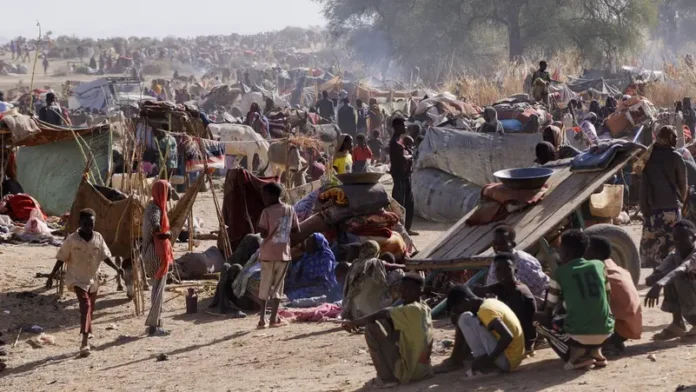
Geneva — A report released Thursday by the United Nations Office of the High Commissioner for Human Rights (OHCHR) revealed that more than 1,000 civilians were killed when the Rapid Support Forces (RSF) seized control of the Zamzam displacement camp in Sudan’s Darfur region last April. About one-third of the victims were allegedly executed extrajudicially.
“Such deliberate killings of civilians or those unable to fight could amount to war crimes of willful killing,” UN High Commissioner for Human Rights Volker Türk said in a statement accompanying the 18‑page report.
Located in Sudan’s western Darfur region, the Zamzam camp had sheltered nearly half a million people displaced by the civil war. RSF fighters launched their assault to take control of the site between April 11 and 13.
On Wednesday, Amnesty International condemned what it called “war crimes” committed by the RSF during the attack on the Zamzam camp, which lies near the city of al‑Fashir, citing fresh testimonies from survivors.
Before the RSF assault last spring, the camp was home to nearly one million people, part of the ongoing two‑year conflict between the RSF and the Sudanese army.
According to Amnesty’s report which aligns with UN findings — RSF members “deliberately killed civilians, took hostages, and looted and destroyed mosques, schools, and medical clinics,” based on the accounts of 29 individuals, including survivors, witnesses, relatives of victims, and journalists.
The attack forced more than 400,000 civilians to flee the camp, according to the organization’s data, corroborated by UN sources. Amnesty called for “investigations into these violations as war crimes under international law.”
Between April 11 and 13, “the RSF attacked the camp using explosive weapons and opened fire indiscriminately in densely populated areas,” the report said.
Amnesty Secretary‑General Agnès Callamard described the assault as “a horrific and deliberate attack on desperate, starving civilians in Zamzam camp, once again showing the RSF’s utter disregard for the right to life.”
Satellite imagery analyzed by Amnesty from April 16 showed new craters not visible before the attack, indicating “widespread use of explosive weapons.”
Survivors recounted harrowing experiences. Younis, a volunteer with “Zamzam Emergency Room,” a local relief coordination group, said, “The situation was terrible. We couldn’t even tell where the shelling was coming from it was everywhere.”
Another survivor, Saadiya, recalled that RSF fighters drove through her neighborhood near the main market, with “one of them standing through the roof of the vehicle, firing at anyone on the street.”
Zamzam camp lies on the outskirts of al‑Fashir, which fell under RSF control in October 2025, forcing at least 100,000 people to flee. Most now live without adequate shelter in the town of Tawila, about 70 kilometers west of al‑Fashir.
(Reuters) / Al‑YURAE

