

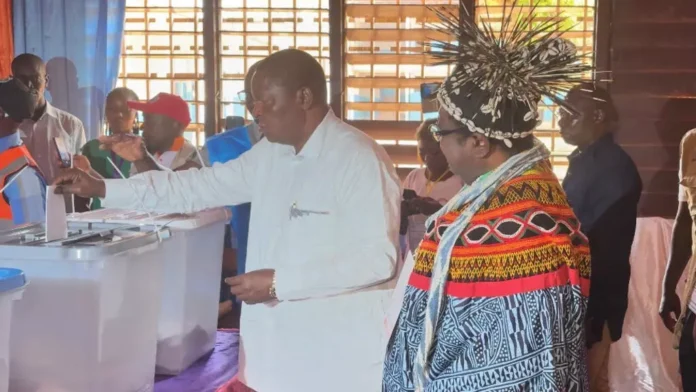
Central African Republic President Faustin-Archange Touadera has secured a third term after the December 28 election, consolidating his rule in a country long plagued by instability. The vote was marked by low turnout and opposition claims of fraud, while analysts warn that security gains remain fragile despite peace deals with rebel groups.
Central African Republic President Faustin-Archange Touadera has won a third term in office, securing an outright majority in the presidential election held on December 28, provisional results from the electoral commission showed on Monday.
The 68-year-old mathematician who took power a decade ago was seeking a third term after a constitutional referendum in 2023 scrapped the presidential term limit.
He campaigned on his security record in the chronically unstable nation after enlisting help from Russian mercenaries and Rwandan soldiers. He also signed peace deals with several rebel groups this year.
The results announced on Monday night by Mathias Morouba, the country’s top election official, showed Touadera received 76.15% of the vote, while former prime minister Anicet-Georges Dologuele received 14.66% and former prime minister Henri-Marie Dondra received 3.19%.
Voter turnout was 52.42%, Morouba said.
The main opposition coalition, known by its French acronym BRDC, boycotted the election, saying it would not be fair.
Even before the results were announced, Dologuele and Dondra had cast doubt on their credibility, calling separate press conferences to denounce what they described as election fraud.
Dologuele, the runner-up in the 2020 election, told a press conference on Friday that there had been “a methodical attempt to manipulate” the outcome.
“The Central African people spoke on December 28,” Dologuele said. “They expressed a clear desire for change.”
Touadera’s government has denied any fraud took place.
The Constitutional Court has until January 20 to adjudicate any challenges and declare definitive results.
Russia ally to stay in power
Touadera’s victory will likely further the interests of Russia, which has traded security assistance for access to resources including gold and diamonds.
But Touadera has also signalled a renewed interest in Western partnerships, saying he would welcome any country willing to develop CAR’s lithium, uranium and gold reserves.
Opposition groups have said the 2023 referendum that allowed him to extend his rule into a second decade was proof he wants to be president for life.
There were no reports of major disturbances during the voting on December 28, a far cry from the last election in 2020, when rebel groups prevented hundreds of polling stations from opening.
But analysts warn Touadera’s security gains remain fragile.
“Armed groups have not disappeared. They have just been incorporated into the system,” said Nathalia Dukhan, Central Africa analyst for the Global Initiative Against Transnational Organised Crime.
Some leaders of armed groups have received government jobs after signing peace deals with Touadera, Dukhan said.
“But if they see that the system is not serving their interest, things could take a dramatic turn,” she added.
Touadera’s control over state institutions and superior financial resources made him the favourite ahead of voting.
(FRANCE 24 with Reuters)

