

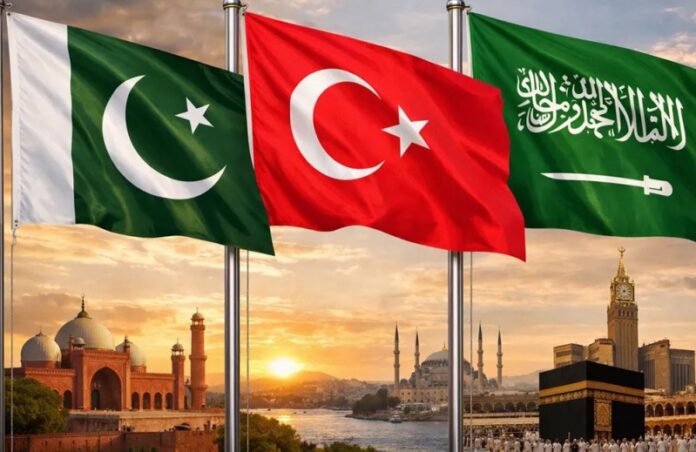
Al-Yurae-Riyadh – Ankara – Islamabad:
Negotiations between Saudi Arabia, Turkey, and Pakistan are moving at a steady pace toward a landmark trilateral defense agreement aimed at strengthening military coordination among three of the most influential nations in the Muslim world.
A Year in the Making
Pakistan’s Minister for Defence Production, Raza Hayat Harraj, told Reuters that the three countries have prepared a draft defense pact following nearly a year of talks. He clarified that the proposed framework is “separate from last year’s bilateral Saudi-Pakistani defense deal” and that “finalization will require mutual consent among all parties.”
Analysts see the move as part of a strategic effort to bolster regional security amid escalating conflicts and global instability. It also reflects a political desire among the three conservative Islamic governments to position themselves as stabilizing forces distancing their image from extremism while facing rising anti-Islam rhetoric globally.
And in a related development, sources indicated that Riyadh and Islamabad have discussed converting around $2 billion in Saudi loans into a fighter jet deal involving the JF-17 aircraft, boosting Saudi defense diversification and supporting Pakistan’s domestic arms industry.
Symbolism and Realpolitik
While the initiative carries symbolic significance, experts doubt it will rival Saudi Arabia’s existing defense partnerships with global powers like the United States, China, Russia, and the United Kingdom. Instead, it underscores Riyadh’s interest in building a more autonomous Islamic security platform, balancing external influence across the Middle East.
Turkey’s Foreign Minister Hakan Fidan confirmed ongoing consultations with Saudi Arabia and Pakistan but noted that “no agreement has yet been signed.” He emphasized the need for rebuilding trust and regional cooperation, arguing that “a lack of internal coordination has allowed foreign powers to dominate the region and fuel persistent crises.”
If the framework is finalized, analysts anticipate that several Arab and Muslim-majority countries could eventually join, forming what may evolve into a broader Islamic defense bloc one with potential to redefine regional power dynamics and reshape global security architecture.

