

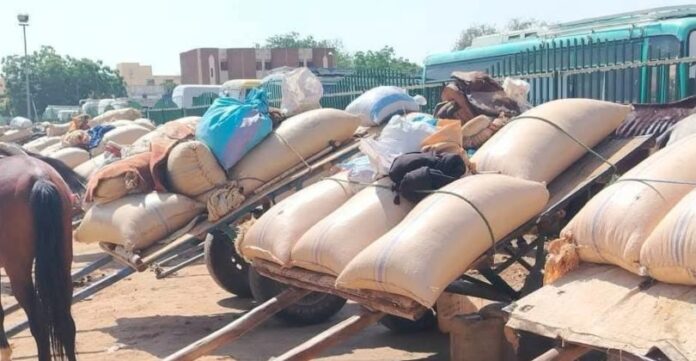

In a series of alarming reports by Radio Dabanga, new evidence has surfaced of speculative practices in sorghum production across Eastern Sudan—echoing the corruption scandals of the 1980s that fueled one of the worst famines in the country’s history.
Decades later, the same economic patterns resurface: harvest seasons that should bring prosperity instead expose the fragility of agricultural markets where small farmers bear the brunt of manipulation by middlemen and weak governmental oversight.
In Gedaref State, the cornerstone of Sudan’s food security, many farmers find themselves trapped between abundant yields and collapsing prices that fail to cover even transport costs. One farmer told Radio Dabanga he sold his crops below cost simply to pay workers and settle seasonal debts—a scenario that has become all too common.
Middlemen continue to exploit the market, buying at minimal prices from small-scale producers and reselling to export companies at huge profits. Despite bumper harvests of sorghum and sesame, local markets remain stagnant, while only watermelon fetches stable prices—an exception that highlights the imbalance between supply and demand.
Agricultural economists warn that what is unfolding in Eastern Sudan is not a temporary price fluctuation, but a systemic collapse. With no strategic grain reserves, weak state purchasing policies, and unregulated export systems, farmers remain the weakest link in the agricultural value chain. Many now face bankruptcy or the loss of their lands.
Experts urge urgent reforms—state intervention to stabilize prices, creation of storage infrastructure, and fair-trade practices—to prevent a repeat of the 1980s famine. The current crisis serves as a stark reminder that abundant harvests alone do not guarantee economic stability; without reform, prosperity may turn to peril once again.
Al-Yara / Radio Dabanga