

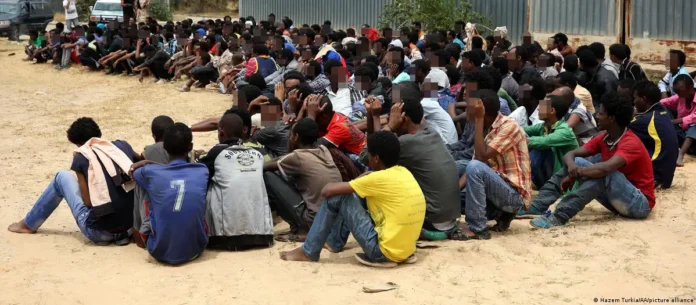

A court in the Dutch city of Zwolle issued a first instance ruling in a migrant smuggling case against Amanuel W., sentencing him to 20 years in prison. He now has two weeks to appeal the decision.
The man from Eritrea was accused of leading a transnational migrant smuggling network. The court said he had treated migrants “without any humanity” as they were transported to Europe via Libya.
“Your only aim was to earn as much money as possible from people who were looking for a better future,” the presiding judge told Amanuel W.
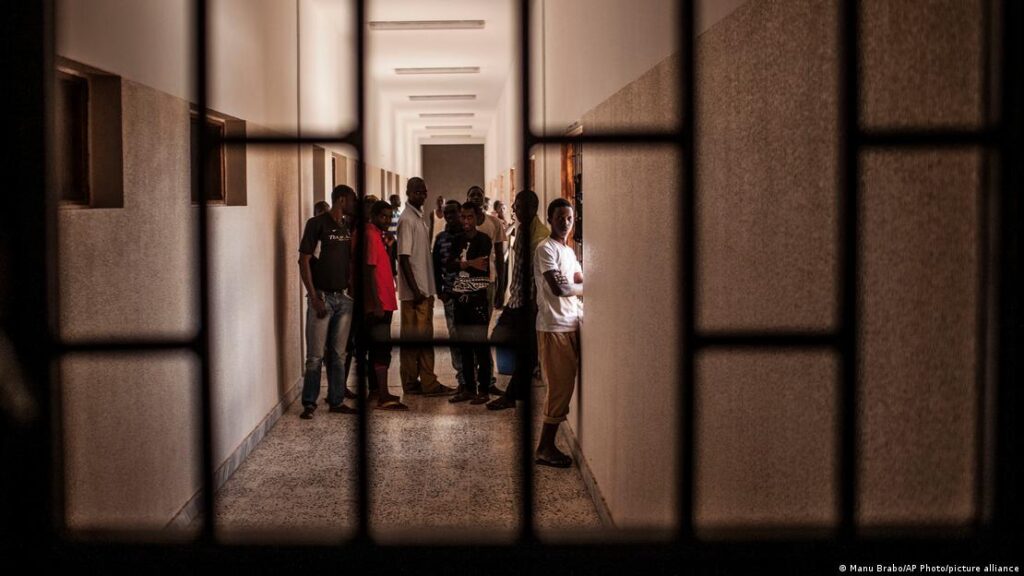
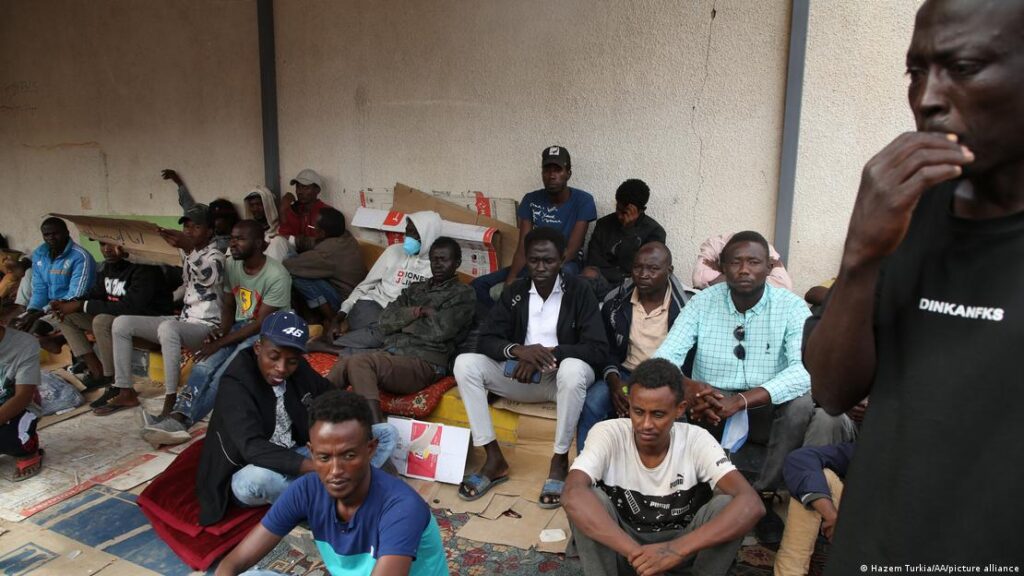 Victims in the case now in court were allegedly abused, tortured and raped in Libyan detention camps, with several reportedly dying, while relatives in the Netherlands were extortedImage: Hazem Turkia/AA/picture alliance
He was charged with various offenses, including human smuggling, extortion, violence and money laundering, and sentenced to 20 years in prison, matching the maximum sentence requested by the prosecutors.
Luigi Prosperi, an expert in international criminal law at the University of Utrecht, Netherlands, told DW that “this is the first time that a European country is prosecuting an individual suspected of being one of the leaders of a criminal organization running multiple detention camps in Libya.”
The case has drawn international attention due to the gravity of the alleged crimes and the legal questions it raises about the Netherlands’ jurisdiction to prosecute crimes that were mostly committed outside its territory.
How migrant smuggling becomes human trafficking
Smugglers exploit people fleeing war or lack of opportunity. What begins as migrant smuggling can quickly turn into human trafficking, as David Yambio, co-founder of the aid organization Refugees in Libya, experienced firsthand.
Yambio fled his home country of Sudan as a young man. He tried to get to Europe from Libya several times and felt he had to rely on smugglers to help him because he had no legal documents to even stay in Libya. Yambio said he was even scared to use busses there, fearing routine checks that would reveal he didn’t have any papers and result in him being sent back to Sudan.
“I was forced to not board the public transport every Libyan person [could use], and I was forced to find someone who can smuggle me,” Yambio told DW.
Migrant smuggling refers to the irregular movement of people across borders, usually in exchange for money. Human trafficking is a category of migrant smuggling that involves sexual or labor exploitation, abuse, forced criminality or even organ removal. For many migrants, that distinction is not theoretical but brutally real.
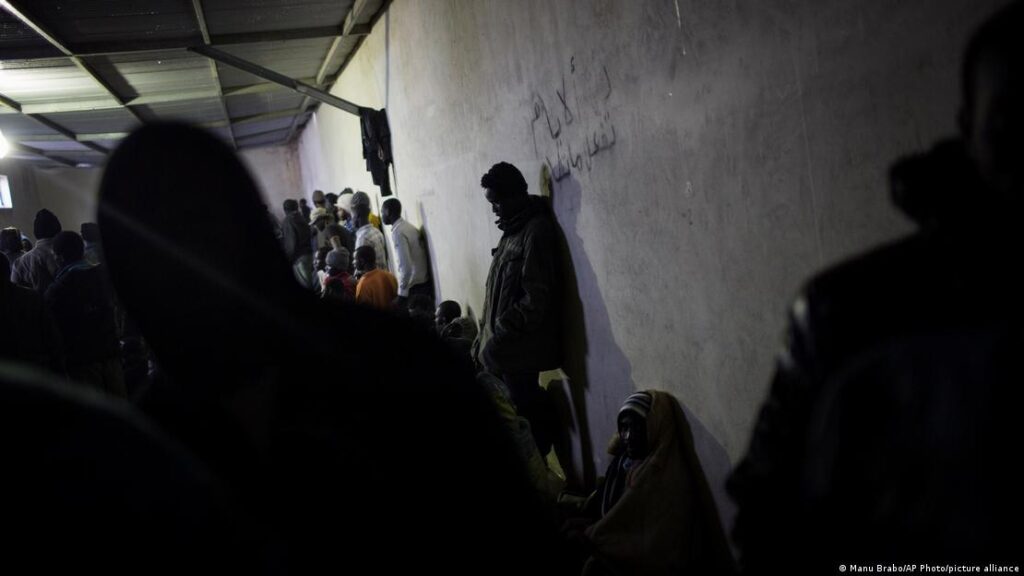
Yambio described some of the abuse he was subjected to in Libya.
“They [the smugglers] hang you upside down and beat you,” he said. “This is what we deal with every day. They burn your skin to enforce obedience and to ensure ransom payments are made.”
Regarding the case currently in court in the Netherlands, Prosperi said that “what migrants thought were migrant smugglers [taking them from A to B], were members of a criminal organization that had planned to kidnap [them] to obtain ransom money from their families”.
Why can the case of Amanuel W. be prosecuted in the Netherlands?
Amanuel W. was extradited to the Netherlands from Ethiopia in October 2022. The crimes he was accused of took place in Libya, while the families of his victims that were pressured for ransom payments lived in the Netherlands. Only after the money was paid would the violence stop and the captive be allowed to continue the journey to Europe.
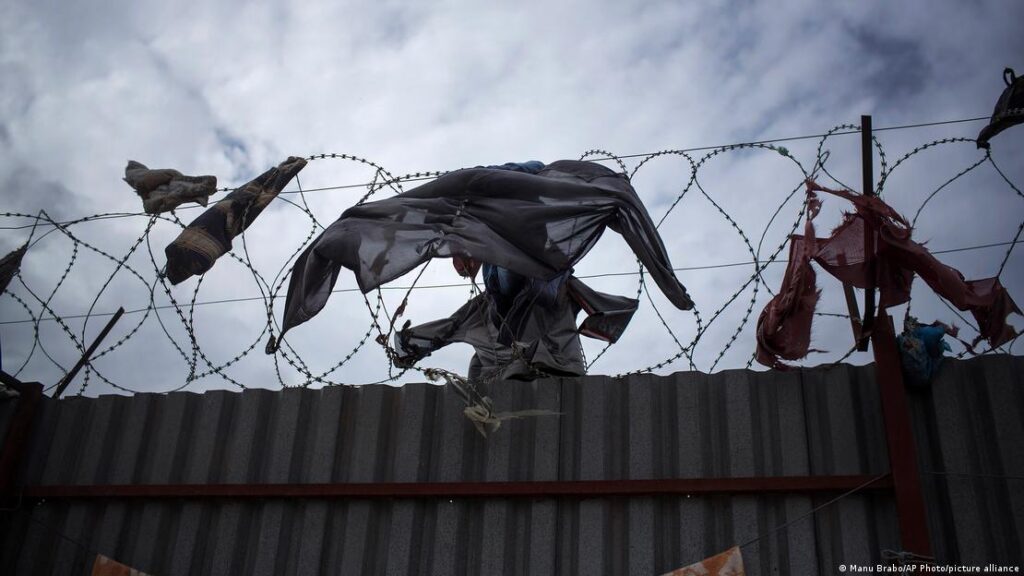
In October 2024, the Dutch Prosecution Service launched an online campaign calling on witnesses from Sudan and Libya. The call was an effort to gather evidence of crimes committed between 2016 and 2024.
Yambio argues that there are more victims of extortion in other European countries, whose access to justice was denied in this case because they did not reside in the Netherlands.
Expert: Migrant smuggling won’t be fixed by immigration crackdowns
In 2024, the European Parliament adopted the EU Pact on Migration and Asylum in response to the challenges posed by the increasing numbers of migrants fleeing conflicts around the world. The plan sets forth measures like tightening border controls and speeding up the return of migrants not eligible for protection through an accelerated asylum procedure. Its implementation is set for June 2026.
“It’s all about responsibility from those countries at the external [EU] border. But also, solidarity from the member states”, said European Commissioner for Internal Affairs and Migration Magnus Brunner at a recent informal meeting of justice and home affairs ministers in Nicosia, Cyprus.
Legal expert Prosperi criticized the European Union’s general approach to migration.
“You cannot just crack down on migration, selling this to the electorate,” he told DW.
The only way to prevent human smuggling crimes, Prosperi said, is to create legal avenues for migrants to seek asylum in Europe. This way, migrants wouldn’t have to rely on violent smugglers anymore.
Dutch prosecutors say the investigation is far from over, as authorities continue to piece together what they describe as a complex transnational criminal operation. Kidane Z. H., another main suspect from Eritrea who was held captive in the United Arab Emirates, was extradited to the Netherlands in December 2025. His initial court hearing is scheduled for March 31.
Source: DW