

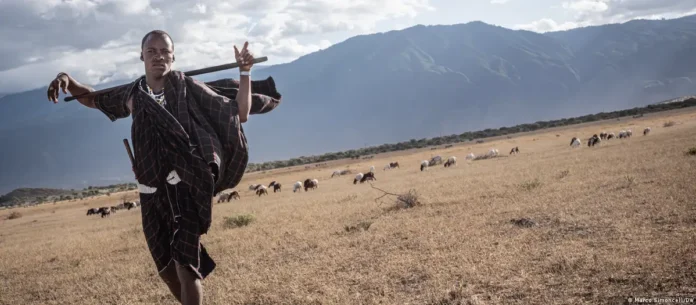

Beyond Arusha, the safari capital of northern Tanzania, the road heads toward Kenya. Shortly before reaching Longido, a dirt track cuts into the savanna, and the snow-capped silhouette of Mount Kilimanjaro appears on the horizon. It marks the entrance to the Enduimet Wildlife Management Area (WMA).
Established in 2007, the Enduimet WMA lies adjacent to Kilimanjaro National Park and the Kenyan border. It involves 11 Maasai villages in a community-based system that has long been presented as a model of conservation in Tanzania.
Under its rules, around 25–33% of revenue from tourism and hunting goes directly to village members through an elected representative body, in contrast to the 3% allocated in game reserves.
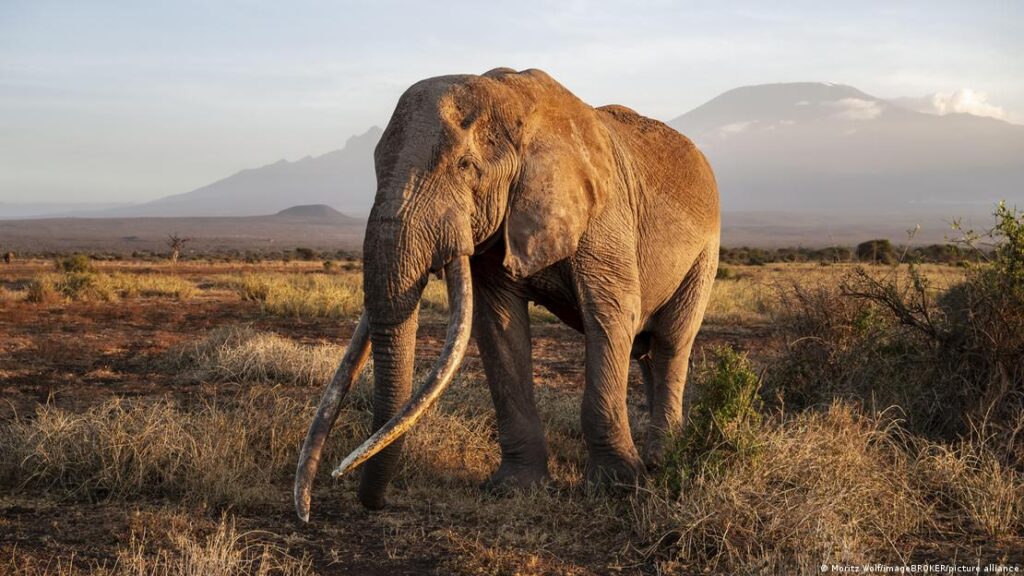
Super tuskers killed
But recently, this conservation model has shown fractures. Between 2023 and 2024, the burned remains of five “super tuskers” — a critically rare elephant population, with fewer than 30 individuals left — were found in the area. According to a source who asked to remain anonymous, the animals were killed during trophy hunts authorized by the Tanzania Wildlife Management Authority (TAWA).
“We knew that five licenses had been issued for the Enduimet area,” the source said. “One of the elephants was only 30 years old, in full reproductive age. The bodies were burned to prevent identification and avoid a media case.”
TAWA did not respond to DW’s request for comment on the allegations.
The incident broke an informal agreement that had stood for almost three decades, ensuring elephants’ safe passage between Kenya and Tanzania.
Kilombero North Safaris (KNS) is one of the companies that obtained hunting permits in the area. Among its clients is Rick Warren, the president-elect of the Dallas Safari Club in the US and a prominent figure within the Safari Club International trophy-hunting lobby. Warren has, in recent years, publicly posted about his hunting exploits in Tanzania, although it is not clear whether he took part in the safaris resulting in the deaths of the rare elephants.
KNS organized the safari that killed at least two of the five elephants. Its owner, Akram Aziz, is an entrepreneur who previously faced 75 charges in Tanzania, including money laundering, illegal possession of ivory, automatic weapons and thousands of rounds of ammunition. The case was later settled with a fine.
The company claims to practice “ethical hunting,” but the Enduimet elephant killings cast doubt over the real priorities of Tanzania’s WMA system. DW contacted KNS over the killings, but as of the time of publication, had not received a response.
Professor Bram Büscher, who researches the impacts of biodiversity conservation, said that “since 1960, the number of protected areas has increased 10- or 15-fold, and conservation funding has never been higher.
“Yet the extinction crisis has worsened,” he told DW, adding: “Many insects, amphibians, and small mammals are disappearing, but they do not fall within the economic priorities of the present system.”
Strain on Maasai communities
Maasai communities have recently experienced disputes with state authorities in lands around Lake Natron, the Ngorongoro Conservation Area, and the Serengeti border.
Meanwhile, local communities in Enduimet have reported increasing pressure on their land. In July 2024, the Enduimet WMA authority issued eight eviction orders. These triggered protests during which the agency’s local office was destroyed. Enduiment WMA manager Igno Isaack Laitayok said the situation came about after “illegal agricultural expansion” from locals.
But Navaya Ole Ndaskoi, of the Tanzanian NGO PINGOs Forum, told DW: “From what sources on the ground have told me, the Maasai of Enduimet have always been opposed to the establishment of this Wildlife Management Area.”
WMAs were introduced in Tanzania during the wildlife-sector reforms of the 1990s, drawing on “community-based conservation” models that the United States Agency for International Development (USAID) had already promoted in Namibia, Zambia and Zimbabwe. USAID was among the main funders of the pilot phase, providing technical support to villages, wildlife-management plans and training for community rangers.
Enduimet WMA has been one of USAID’s key intervention areas for more than 15 years and is included in Tuhifadhi Maliasili (meaning ‘Preserve Natural Resources’ in Kiswahili), the$30-million program (about €26 million) for 2021–2026.
“Although Enduimet is presented as a community-managed area, the villages do not actually own the land. It remains under the president’s trusteeship,” explained another local source who asked to remain anonymous.
The view that communities have no real decision-making power is widely shared among researchers.
Western funding
Due to repeated human rights violations in northern Tanzania — such as using live ammunition to crush protests, violent evictions and preventing access to vital services — the European Commission suspended conservation funding to the East African nation in 2024.
The World Wildlife Fund for Nature (WWF), particularly its German and Tanzanian offices, continues to operate in these areas through the cross-border SOKNOT-Unganisha project.Germany’s Federal Ministry for Economic Cooperation and Development (BMZ) funds it with €6.5 million. Private companies and nonprofits, including Cosnova Beauty, Vonmaehlen, and the Michael Otto Foundation, support the initiative aiming to protect key wildlife corridors, among them the Enduimet linkage between Kilimanjaro National Park and Kenya’s Amboseli National Park.
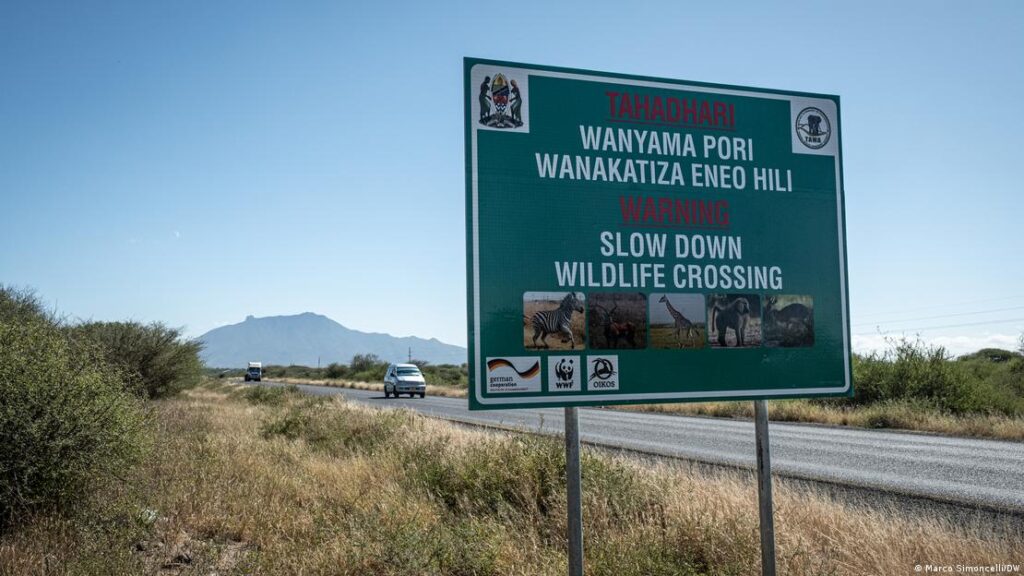
Novati Kessy, project manager at WWF Tanzania, explained the organization’s approach: “What we do is develop alternatives to hunting, showing that it is possible to achieve much higher earnings through ecotourism.”
The core of the SOKNOT-Unganisha program in the Enduimet WMA is a pilot project on wildlife credits in the Kitenden Corridor, which links Kenya’s Amboseli National Park with conservation areas in northern Tanzania. The initiative is supported by furniture company Ikea, and has also received funding from the United Kingdom’s Darwin Initiative with more than €200,000.
According to WWF, wildlife credits turn conservation into a direct benefit for communities. The economic value of the credits is tied to the presence of wildlife, and villages receive payments from donors, companies or tourism operators interested in strengthening their environmental, social and governance profile, particularly on the environmental side.
Indigenous rights ignored
This argument does not convince lawyer Joseph Oleshangay, who has long worked on land issues affecting Maasai communities. These include instances where former Maasai lands have been reallocated for conservation programs, which include tourism and hunting concessions.
“It is no coincidence that in the places where WWF carries out its projects, hunters are often active as well,” he told DW. “And they collaborate with the same agencies responsible for human rights violations, such as TAWA.”
Other international actors, including Survival International, also see wildlife credits as a form of commodifying nature, leaving communities dependent on donor and tourism flows while failing to address the structural pressures on Maasai land.
In response to questions about the WWF operating in areas where evictions and restrictions on Maasai communities occur, WWF’s Novati Kessy urged dialogue as a way of finding compromises. “We understand that our activities can trigger consequences or risks for communities, and we are very interested in capturing these aspects in order to address them,” he said.
Kessy added that the WWF had developed fundamental guidelines to follow for the environment and the local population. “We do nothing before communities have had a proper and in-depth understanding of the project.”
As in the cases of Pololeti, Ngorongoro and Lake Natron, where the Maasai were relocated from their ancestral lands, the core issue in Enduimet remains land distribution. For the Maasai, who for centuries have moved their herds between Kenya and Tanzania, the new borders, permits and regulations represent exclusion where elephants, giraffes and zebras form the backdrop to a landscape turned into an asset to be monetized.
Source : DW -This reporting is supported by the Pulitzer Center and the Investigative Journalism for Europe fund (IJ4EU).