

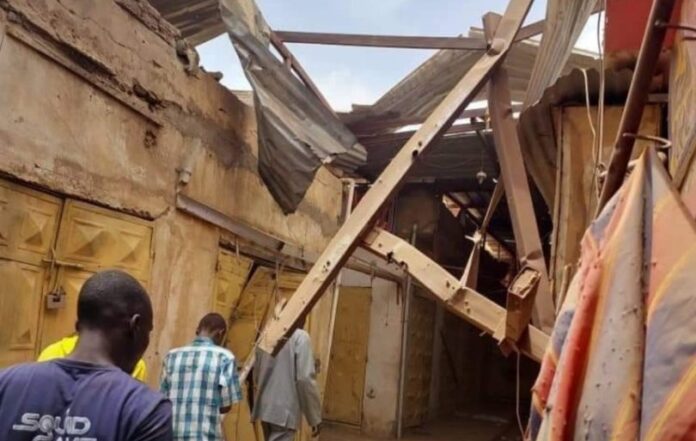
El Fasher – The city of El Fasher, the capital of North Darfur State, witnessed another bloody incident on Tuesday when artillery shelling by the Rapid Support Forces (RSF) targeted a temporary shelter for displaced people in the Abu Shouk Al-Hilla neighborhood. The attack left eight civilians dead, including women and children, and dozens more wounded with varying degrees of injuries, further deepening the tragedy of a city that has been under tight siege for more than a year.
According to eyewitnesses, four artillery shells struck directly at the shelter, which was overcrowded with displaced people who had fled various neighborhoods of El Fasher as well as the Zamzam and Abu Shouk camps in search of safety. The bombardment caused large parts of the shelter buildings to collapse into rubble, leaving behind a catastrophic scene.
Field reports indicated that most of the victims were women and children, while local volunteer teams rushed to rescue the injured and transfer them hastily to the Saudi Hospital, the only functioning medical facility in the city. A medical source confirmed that the closure of the Abu Shouk Health Center—after its doctors left due to deteriorating security conditions—had worsened the suffering of the wounded and displaced, who are deprived of adequate medical care and resources.
Shocking Testimonies and Images
Videos and photographs circulating on social media revealed the scale of destruction inside the shelter: food containers and bedding scattered amid the rubble, walls cracked by shrapnel, and bloodstains of civilians who could not escape. Activists and human rights advocates described the incident as a “massacre,” calling for the immediate lifting of the siege on the city and the urgent delivery of humanitarian aid to its residents.
Official Condemnation and Calls for Investigation
Darfur Regional Governor Minni Arko Minnawi strongly condemned the attack on the displaced persons’ shelter, labeling it “a new crime” added to the record of RSF abuses against unarmed civilians. In a statement posted on his Facebook page, Minnawi said: “This treacherous assault deliberately targeted women, children, and the elderly among the displaced. It proves that the militia does not distinguish between fighters and civilians, while continuing its scorched-earth policies and genocidal crimes against the people of Darfur.”
He added that the shelling constitutes “a blatant violation of international humanitarian law,” urging international human rights organizations to intervene immediately to save civilians in El Fasher and protect those still trapped under deteriorating humanitarian conditions.
Escalating Conflict and Humanitarian Disaster
The incident comes amid mounting military escalation as the conflict between the Sudanese army and the RSF has raged since mid-April 2023. According to United Nations and Sudanese government figures, the war has so far claimed the lives of more than 20,000 people and displaced or forced into exile nearly 15 million others. A study by American universities, however, suggested the death toll could be as high as 130,000, underscoring the unprecedented scale of the humanitarian catastrophe.
Recent UN and international reports have warned of “alarming plans” for expanded attacks using drones and indiscriminate shelling in Darfur, which could further exacerbate the plight of civilians and accelerate the looming humanitarian disaster. El Fasher, as one of the region’s central cities, has been living under months of suffocating siege with food and medical supplies cut off and rising numbers of displaced people seeking refuge. The targeting of displacement shelters now represents a direct threat to the survival of remaining civilians.
Prolonged Tragedy and Awaiting Rescue
With this latest shelling, the war in Darfur has claimed yet another tragic chapter, piling more misery on besieged civilians who face an uncertain fate between hunger, siege, and unrelenting warfare. While the world grapples with successive crises, the people of El Fasher and Darfur remain trapped in the heart of one of the worst humanitarian disasters Sudan has known in its modern history.

